


RESCON: Housing industry can ill-afford the rising costs of construction
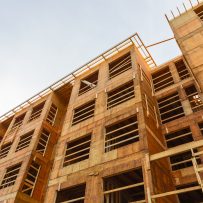
Tariffs, soaring diesel costs and constrained domestic steel supply are all pushing housing in the wrong direction
Richard Lyall, Published Nov 13, 2026
Canada desperately needs more housing. However, the residential construction industry is caught in a perfect storm of rising costs.
Just as governments are calling on the industry to dramatically increase supply, a new collection of economic and trade pressures threatens to push us in precisely the opposite direction.
Just as governments are calling on the industry to dramatically increase supply, a new collection of economic and trade pressures threatens to push us in precisely the opposite direction.
The continuing Canada-U.S. tariff battle, a dramatic surge in diesel prices and the indefinite idling of galvanized steel production at Stelco in Hamilton threaten to dramatically escalate costs.
Each presents a serious challenge on its own. Together, they will increase the cost of building, make projects more difficult to finance and further undermine the economics of new housing.
And ultimately, builders won’t be the only ones paying. Homebuyers and renters will pick up the tab.
The timing couldn’t be worse. A CMHC report indicates that inflation-adjusted house prices in Canada have more than doubled since 2005, rising faster than in most developed countries. Meanwhile, nearly five new residents have been added for every house completed in 2023 and 2024.
We should be removing obstacles to construction and reducing the cost of producing housing. Instead, the industry is confronting another round of cost increases.
Tariffs are perhaps the most obvious example.
The cross-border construction supply chain is highly integrated. Tariffs and counter-tariffs affect structural steel, rebar, pipe, fasteners, lumber, engineered wood, flooring and manufactured components such as HVAC equipment, elevators, electrical products and appliances.
A RESCON analysis estimates measures introduced Sept. 8 add roughly $9,000 to $14,000 to the cost of a typical Ontario single-detached home and $18,000 to $20,000 to a mid-rise unit. That’s on top of $15,000 to $25,000 already added to Ontario homes by measures introduced in March 2025.
Builders cannot indefinitely absorb tens of thousands of dollars in additional costs per unit, particularly when financing and carrying costs remain high and sales have weakened.
Eventually, those costs must show up somewhere. That means higher prices for purchasers, higher rents for tenants or, increasingly, projects that simply don’t proceed.
Diesel is adding another layer to the problem.
It is the dominant energy source on construction sites, powering excavators, loaders and other heavy equipment. But its impact doesn’t end at the jobsite gate. Diesel is also embedded in virtually everything transported to a construction project.
With diesel prices roughly 70 per cent or more above year-ago levels, the shock is flowing through equipment operating costs, freight and delivery, and fuel-intensive products such as aggregates, cement, asphalt and precast concrete.
The national average retail diesel price approached $2.60 a litre in mid-October, more than $1.06 above a year earlier.
Consider what that means across an industry that consumed approximately 1.72 billion litres of diesel in 2023. At an additional $1.06 per litre, the arithmetic points to about $1.8 billion in extra direct fuel costs on an annualized basis.
Transportation-intensive building materials are particularly vulnerable. Up to 60 per cent of the cost of aggregates can be tied to transportation, while higher fuel costs are already producing surcharges on products such as cement.
Housing doesn’t get built without moving people, equipment and enormous quantities of materials. When the cost of moving all three rises, the cost of a home inevitably follows.
Then there is steel.
Stelco indefinitely idled its Hamilton cold-rolled and galvanized production lines on Oct. 9, affecting up to 500 jobs and taking an important source of domestic galvanized steel out of the market.
Galvanized steel is used for steel studs and framing, HVAC ductwork, roofing, flashing, siding trim, joist hangers, connectors and decking. The consequences of reduced domestic availability will be higher prices and longer lead times, with mid- and high-rise construction particularly exposed.
Alternative supply isn’t necessarily an easy solution. Dofasco is rationing orders, while steel imported above federal quotas faces a 50-per-cent surtax.
We are presently in a housing crisis and have ambitious construction targets. Yet the economics of actually producing those homes continue to become more difficult.
Ontario is already well behind its goals. Against a 2025 target of 150,000 new homes, the province recorded 86,760 – and that’s with basement and laneway units, long-term care beds, retirement homes and student housing added into the mix.
The GTA high-rise market, for one, is flashing an unmistakable warning signal. Just 129 new high-rise units were sold in September, 40 per cent below September 2025 and 90 per cent below the 10-year average.
Those aren’t conditions in which the industry can casually absorb another round of cost increases.
Tariffs, soaring diesel costs and constrained domestic steel supply are all pushing housing in the wrong direction.
As housing becomes more costly, projects become less viable, supply tightens and starts suffer.
And at the very end of that long chain is somebody trying to buy their first home or find an apartment they can afford. They’re the ones who will ultimately pay the price.
Richard Lyall is president of the Residential Construction Council of Ontario (RESCON). He has represented the building industry in Ontario since 1991. Contact him at media@rescon.com.
