


Despite Montreal’s shortage of rental housing, developers struggle to fill units in new buildings
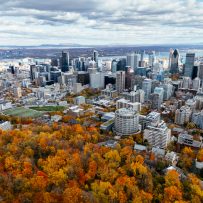
High vacancy rates raise questions about whether the right housing is being built and whether it’s too expensive.
By Leora Schertzer, Last Updated: September 23, 2026
Competition in Montreal’s rental market has tightened over the last decade, yet many apartments in new buildings sit empty.
According to a survey from the Canada Mortgage and Housing Corp., the vacancy rate in 2025 for rental units in new builds (constructed between 2022 and 2025) across Montreal was 8.4 per cent.
That was nearly three times higher than the Montreal average of 2.9 per cent, which Université de Montréal professor of urban economy Jean-Philippe Meloche says is considered a standard vacancy rate in the real estate world. For buildings constructed before 1940, the vacancy rate in 2025 was 2.1 per cent.
Quebec’s provincial and municipal governments have pushed policies to promote building new residences as a solution to the housing crisis. But the high vacancy rate in new builds raises questions about whether the right housing is being constructed and whether it’s too expensive.
“There is definitely something wrong with the current development programs, where the developers and promoters are essentially building new housings and condos that are too expensive for the average tenant,” Benoit Rullier, a spokesperson for the Regroupement des comités logement et associations de locataires du Québec (RCLALQ), said in an interview.
Another data set from CoStar shows Montreal’s average vacancy rate for buildings with five units or more is 4.7 per cent, with a 13.4 per cent vacancy rate in those built after 2020 and a three per cent vacancy rate in those built before 2020, according to analyst Mitch Strohminger.
Meloche says the high vacancy rate in new builds will eventually correct itself.
“The problem is that the housing market is adjusting very slowly, which means you have these units that are vacant, but they don’t fit what most people are looking for,” he said in an interview.
Montreal is experiencing a similar pattern to Toronto and Vancouver, where developers are focusing on condominiums with many single-occupancy units, but they sit empty because they aren’t filling the rental market’s needs, Strohminger said.
“A lot of the new builds that have been built — the vast majority, I would argue — are priced out of the range of the average Montrealer,” he said.
Nicolas Galardo, a partner for the Montreal-based real estate company Groupe Montclair, said the issue sprang from the federal government and the CMHC creating incentives to finance high-density development projects with smaller apartment units that weren’t necessarily “targeted toward the right demographic,” adding the incentives should have focused on filling the largest gaps in the housing market, including “family, affordable and social” housing. He also said it would have helped if more of the new buildings were created by developers with more knowledge and experience.
“Any promoter and their uncle could get into the (rental) business,” Galardo said in an interview.
In previous decades, when Montreal’s architecture favoured triplexes and mid-rise buildings, rental apartments were built large enough to accommodate families, Strohminger explained. Now, “developers, in order to make their numbers work, have had to shrink on the size of the overall unit,” he said.
Another signal that owners of new buildings are struggling to fill rental units is the pervasive promotions offering three months of free rent and free internet and heating, Galardo added.
“Right away, when you see that a majority of the promoters are doing so, the vacancy rates are starting to be worrisome,” he said.
Bridging the gap between expensive and affordable housing
With the Quebec election two weeks away, party leaders have been forced to answer how they plan to address the province’s housing crisis.
Québec solidaire has made affordable housing a focus of its campaign, proposing an $11.8-billion housing plan that would add 50,000 social housing units. While the party says half of those units would be built from scratch, it also proposes removing 25,000 existing units from the private market and transforming them into affordable housing.
“Since this crisis is not just a shortage of supply, but primarily a housing price crisis, this strategy will allow us to quickly provide new, genuinely affordable housing, curb renovictions and improve the energy efficiency of buildings,” the party said in its platform.
The Parti Québécois’s housing plan focuses on access to home ownership, including financial assistance for first-time buyers, growing the housing supply by easing regulations on construction companies and reducing immigration levels.
The Quebec Liberal Party and the Coalition Avenir Québec have both emphasized ramping up construction of new units. The Liberals would aim to build 100,000 housing units per year, with a focus on prefabricated construction.
The Conservative Party of Quebec also says it would increase the housing supply, promising to reduce red tape around residential construction and diminish litigation with Quebec’s housing tribunal, which it says has “resulted in unreasonable delays.”
Given the high cost of new builds, the focus from Quebec’s party leaders on developing new housing would not solve the shortage of affordable rentals or social housing, said Rullier of the RCLALQ.
“The different programs that are being proposed with the different parties show that they have in mind new ways to develop cheaper housing (and) cheaper development. But we think that it’s going to just partially satisfy the needs,” he said.
Meloche emphasized that it’s normal for new builds to have a high vacancy rate, and over time the vacancy rate and prices will come down as the market resolves itself, even if the transition period will be unpleasant for low-income renters over several years.
“Prices can rise, and they can rise quite high, and it’s not necessarily a crisis that will make life impossible. It will make life worse. Of course, we don’t like rent to rise. We don’t like people to have trouble finding places to live,” he said.
“I’m not saying that people are not suffering right now, but the tip of the crisis is behind us.”
www.montrealgazette.com/news/montreal-rental-housing-new-buildings/
